Abstract
Background: Nonsteroidal anti-inflammatory drugs (NSAIDs) are among the most common causes of drug hypersensitivity reactions. Identifying safe alternative NSAIDs through oral provocation testing (OPT) is essential for clinical management. The 2025 World Allergy Organization (WAO) classification introduced updated phenotypes, highlighting the need for real-life data on tolerated alternative agents.Materials and methods:This retrospective study included 824 adults evaluated for suspected NSAID hypersensitivity between January 2020 and September 2025. Patients were reclassified according to the 2025 WAO criteria. Demographic characteristics, comorbid allergic diseases, culprit drugs, laboratory parameters, and outcomes of OPT with alternative NSAIDs were analyzed.Results:The mean age was 44.7 ± 13.2 years, and 65.5% of patients were female. According to the 2025 WAO classification, 48.8% had NSAID-exacerbated cutaneous disease (NECD), 32.2% NSAID-induced urticaria/angioedema (NIUA), and 11.2% single NSAID-induced urticaria/angioedema/anaphylaxis (SNIUAA). Among 704 patients undergoing OPT, tolerance rates were high for meloxicam (96%), nimesulide (97%), and celecoxib (98.6%). The distribution of asthma, rhinitis, urticaria/angioedema, chronic sinusitis, and nasal polyps differed significantly among WAO phenotypes (p < 0.05), whereas tolerance to alternative NSAIDs did not differ between groups (p > 0.05).Conclusion:Meloxicam, nimesulide, and celecoxib are well tolerated in most patients with NSAID hypersensitivity. The 2025 WAO classification improves phenotypic stratification, while OPT remains a reliable method for identifying safe alternative NSAIDs in real-life practice.
Keywords: Nonsteroidal anti-inflammatory drugs; drug hypersensitivity; oral provocation test; meloxicam; celecoxib
1. Introduction
Nonsteroidal anti-inflammatory drugs (NSAIDs) are among the most frequently implicated agents in drug hypersensitivity reactions worldwide. NSAID hypersensitivity reactions are generally classified into two main types: immediate and delayed. Immediate-type reactions typically develop within the first six hours after drug intake and may occasionally extend up to 24 hours, whereas delayed-type reactions occur beyond 24 hours 1.
The classification of NSAID hypersensitivity proposed in the 2019 EAACI/ENDA guidelines was revised in 2025 by the World Allergy Organization (WAO) to address patients who could not be clearly assigned to any existing group2. In addition to the previously defined phenotypes—NSAID-exacerbated respiratory disease (N-ERD), NSAID-exacerbated cutaneous disease (NECD), NSAID-induced urticaria/angioedema (NIUA), and single NSAID-induced urticaria/angioedema/anaphylaxis (SNIUAA)—the updated classification now includes mixed N-ERD, mixed NECD, NSAID-exacerbated food allergy (NEFA), and NSAID-induced food allergy
Corresponding Author: Zeynep Yegin Katran, zynpyegin@hotmail.com, Received:
(NIFA)2.
Accurate phenotypic classification is essential for clinical management in patients with NSAID hypersensitivity. Drug provocation testing (OPT) remains the gold standard for confirming hypersensitivity, assessing cross-reactivity, and identifying safe alternatives3. Determining alternative NSAIDs that can be tolerated provides an opportunity for safe reintroduction of these agents when clinically indicated4.
Our data indicate that identifying safe alternative agents constitutes a cornerstone of clinical management in NSAID hypersensitivity. The transition from the 2019 EAACI/ENDA to the 2025 WAO classification has enabled more precise characterization of “blended/mixed” phenotypes and has reinforced the role of OPT as an indispensable part of diagnostic evaluation. However, real-life data regarding which alternative NSAIDs (e.g., oxicams, selective COX-2 inhibitors, or sulfonanilides) can be safely used in specific patient subgroups remain limited. Nevertheless, evidence from real-
31.12.2025, Accepted: 17.02.2026, Available Online Date: 15.03.2026.
No Derivatives License 4.0 (CC-BY-NC-ND), where it is permissible to download and share the work provided it is properly cited. The work cannot be changed in any way or used commercially without permission from the journal.
life settings remains scarce on which alternative NSAIDs—such as oxicams, sulfonanilides, or selective COX-2 inhibitors—can be safely administered in specific phenotypes of NSAID hypersensitivity5-7.
Therefore, this study aimed to evaluate the outcomes of graded oral provocation tests with alternative agents in patients with confirmed NSAID hypersensitivity, and to analyze their association with comorbid allergic diseases and reaction severity. The study design, inclusion and exclusion criteria, classification approach, and OPT protocol are detailed below.
2. Materials and Methods
Study Design and Participants This retrospective study was conducted at the Department of Allergy and Immunology, University of Health Sciences Süreyyapaşa Chest Diseases and Thoracic Surgery Training and Research Hospital (Istanbul, Türkiye). Medical records of patients who presented with a suspicion of nonsteroidal anti-inflammatory drug (NSAID) hypersensitivity between January 2020 and September 2025 were reviewed.
The diagnosis of NSAID hypersensitivity was established based on a detailed clinical history, characteristics of the index reaction, and, when necessary, confirmatory drug provocation testing (OPT). Adult patients who underwent oral provocation testing with alternative NSAID agents were included in the study. Cases with incomplete medical documentation or missing test results were excluded.
Classification Patients were reclassified according to the type of reaction and clinical characteristics based on both the 2019 EAACI/ENDA and 2025 WAO classifications for NSAID hypersensitivity. The severity of reactions was graded according to the Brown anaphylaxis severity scale.
Selection of Alternative Drugs The selection of alternative NSAIDs was individualized according to the clinical indication, previous reaction history, and coexisting allergic or systemic diseases. In routine clinical practice, the most frequently tested alternative agents were meloxicam, nimesulide, and celecoxib, representing partially COX-2–selective, sulfonanilide-derived, and fully COX-2–selective agents, respectively.
Oral Provocation Test (OPT) Protocol All provocation tests were performed in the allergy testing unit under direct medical supervision, with full emergency management facilities available. Prior to testing, patients were instructed to discontinue antihistamines, systemic corticosteroids, and leukotriene receptor antagonists for at least five days.
Each alternative NSAID was administered orally using a two-step graded protocol. Initially, one-quarter (¼) of the total therapeutic dose was given. After 20 minutes, the patient was observed for clinical symptoms. If no reaction occurred, the remaining three-quarters (¾) of the dose were administered as a single step. The test was completed once the total cumulative dose reached the standard therapeutic amount.
Following each administration, patients were observed for at least two hours for potential adverse reactions. If no reaction occurred, the tested NSAID was considered “tolerated” or “safe.” In cases where a reaction developed, the test was immediately discontinued and appropriate treatment—antihistamines, systemic corticosteroids, and/or intramuscular epinephrine—was administered as clinically indicated.
Laboratory Evaluation For all patients, laboratory parameters including total IgE level, absolute eosinophil count, and serum tryptase concentration were
recorded. The presence of atopy was determined by skin prick testing and/or specific IgE measurement.
Statistical Analysis Data were analyzed using the Statistical Package for the Social Sciences (SPSS) version 25.0. Descriptive statistics were expressed as frequency and percentage for categorical variables, and as mean ± standard deviation (SD) or median (interquartile range, IQR) for continuous variables. Comparisons of categorical variables were made using the Pearson chi-square test or the Fisher-Freeman-Halton test. The normality of distribution for continuous variables was assessed by the Kolmogorov-Smirnov test. For comparisons among more than two independent groups with parametric data, one-way ANOVA was applied. A two-sided p value of < 0.05 was considered statistically significant, and results were presented with 95% confidence intervals (CIs).
This study was approved by the Ethics Committee of the University of Health Sciences Süreyyapaşa Chest Diseases and Thoracic Surgery Training and Research Hospital
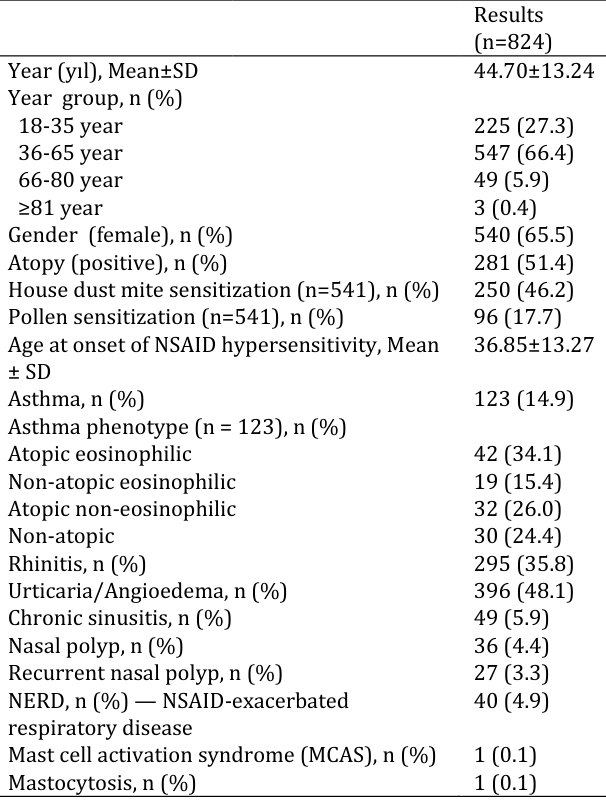
Table 1
Distribution of Demographic Characteristics of the Patients
3. Results
A total of 824 patients who presented with suspected NSAID hypersensitivity were included in the study. The demographic characteristics of the patients are summarized in Table 1. The mean age was 44.7 years, and 66.4% of the patients were between 36 and 65 years of age. Females accounted for 65.5% of the study population.
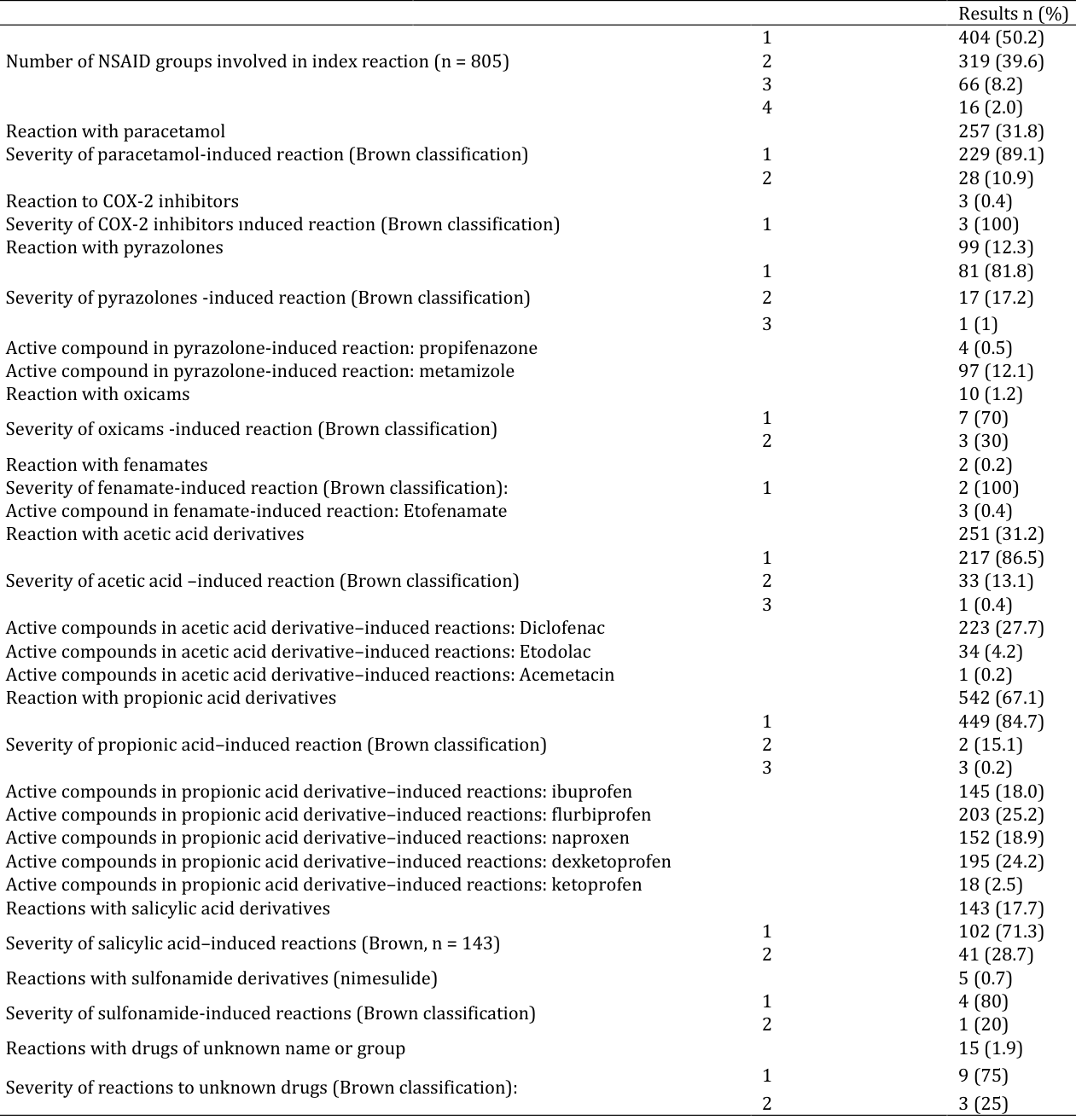
Table 2
Clinical and Lifestyle Characteristics of the Patient

Distribution of Index Reaction Outcomes Among Patients
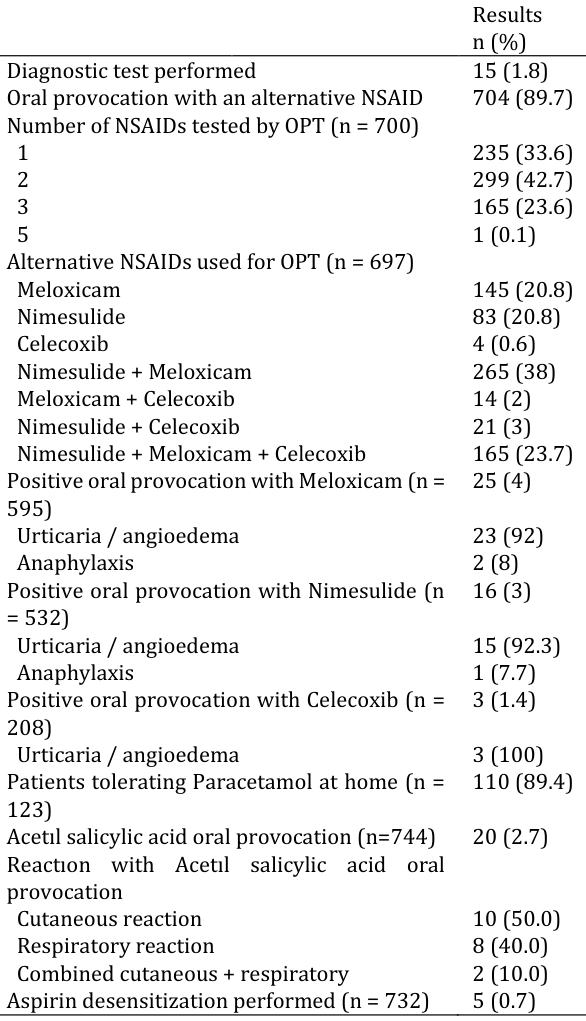
Distribution of Diagnostic Test Results in Patients
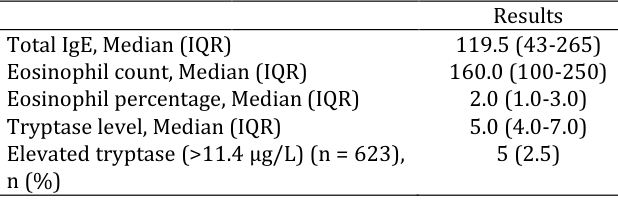
Distribution of Laboratory Parameters in Patients
Among all patients, 281 (51.4%) had atopy, 123 (14.9%) had asthma, 295 (35.8%) had rhinitis, 396 (48.1%) had urticaria and/or angioedema, 49 (5.9%) had chronic sinusitis, and 36 (4.4%) had na-sal polyps.
The distribution of patients according to the 2025 WAO classifi-cation is presented in Table 2. The index (culprit) reaction charac-teristics are detailed in Table 3. A single NSAID group was impli-cated in 404 cases (50.2%), two NSAID groups in 319 cases (39.6%),
and three or more groups in the remainder.
Paracetamol was the culprit drug in 31.8% of index reactions, with Brown grade 1 reactions observed in 89.1% of these patients. Pyrazolones were responsible in 67.1% of cases, most of which were mild (Brown grade 1, 84.7%), while 15.1% were grade 2 reac-tions. Similarly, propionic acid derivatives were implicated in 31.8% of index reactions, again predominantly mild (Brown grade 1, 89.1%).
The results of confirmatory and provocation tests are summa-rized in Table 4. A culprit agent could be identified in 14 patients (1.7%), with aspirin accounting for 57.1% of confirmed cases. A to-tal of 704 patients (89.7%) underwent oral provocation testing (OPT) with alternative NSAIDs. Positive provocation results oc-curred in 4% of meloxicam challenges, 3% of nimesulide challenges, and 1.4% of celecoxib challenges. Among aspirin challenges, 10 pa-tients developed cutaneous reactions, 8 had respiratory reactions, and 2 experienced both cutaneous and respiratory symptoms.
The laboratory findings of the patients are presented in Table 5. The median total IgE level was 119.5 IU/mL (IQR: 43.0–265.0), eo-sinophil count was 160/µL (IQR: 100–250), and serum tryptase was 5.0 µg/L (IQR: 4.0–7.0).
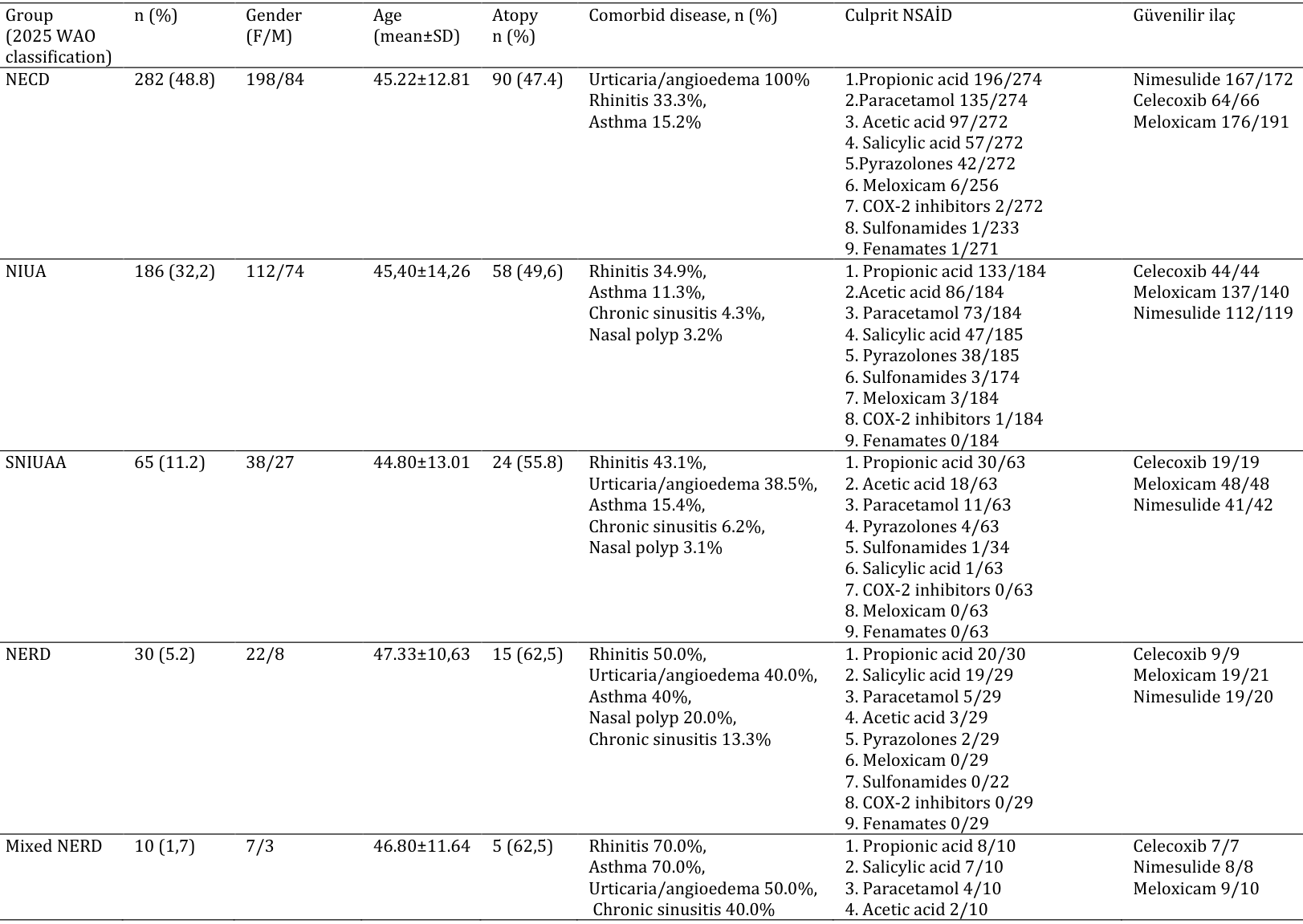
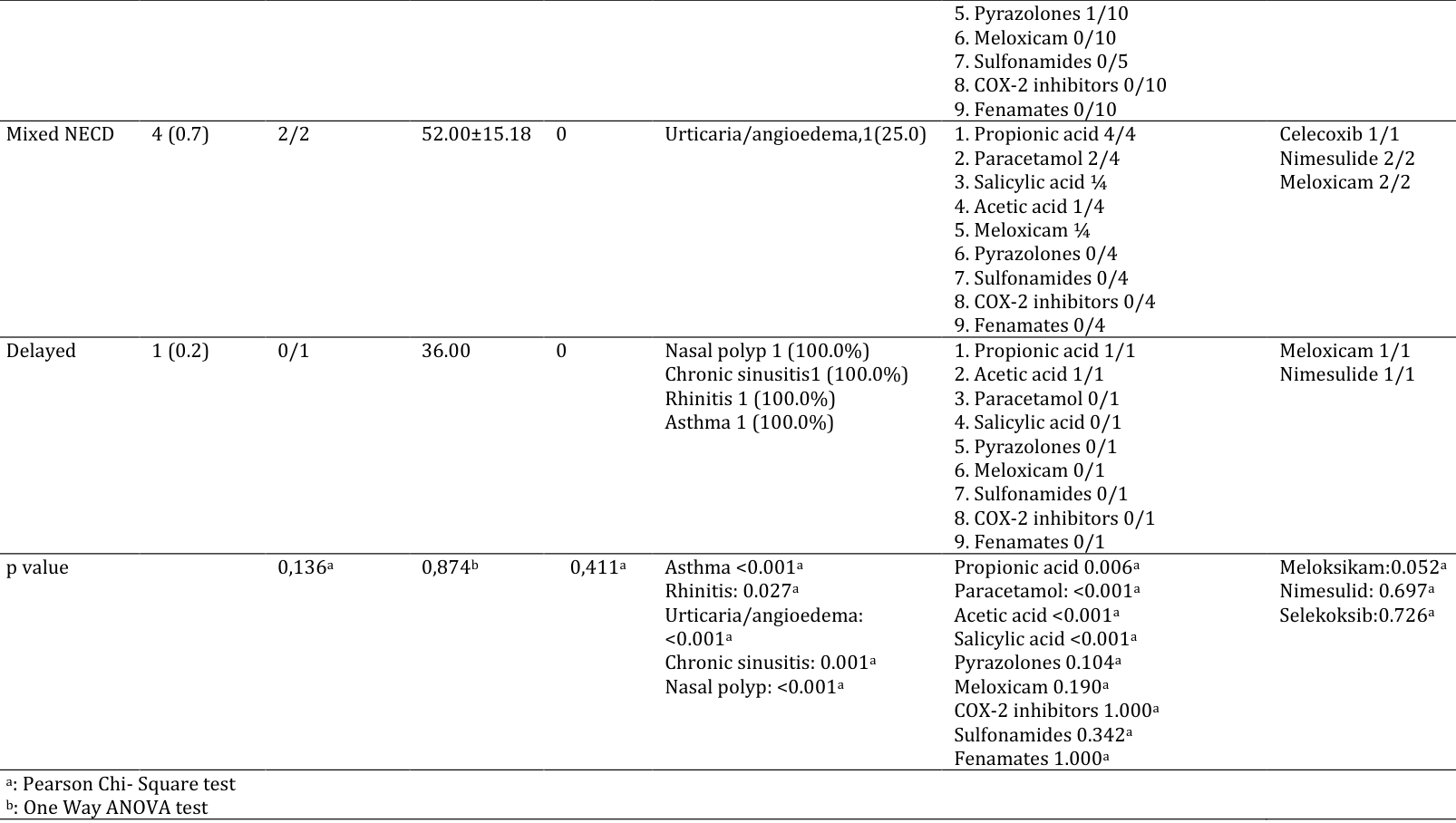
Table 6 presents the distribution of patients according to the 2025 WAO classification in relation to sex, age, atopy, comorbid al-lergic diseases, culprit agents, and tolerated alternative drugs. No statistically significant differences were found between groups re-garding sex, age, atopy status, or rate of tolerated drugs. However, significant differences were observed in the distribution of asthma, rhinitis, urticaria/angioedema, chronic sinusitis, and nasal polyps among groups (p < 0.05). Similarly, the distribution of patients with reaction histories to propionic acid derivatives, paracetamol, acetic acid derivatives, and salicylic acid derivatives differed significantly across groups (p < 0.05).
4. Discussion
In this study, we evaluated the results of oral provocation tests performed with alternative NSAID agents in a large cohort of pa-tients and analyzed their relationship with clinical characteristics. We observed that meloxicam, nimesulide, and celecoxib were the most frequently tolerated agents. This finding supports previous re-ports showing that COX-2 selective or partially selective NSAIDs tend to be well tolerated in patients with NSAID hypersensitivity.
In our study, the majority of patients were middle-aged women, consistent with findings from previous studies in the literature8. The prevalence of atopy was also comparable to other cohorts.
This study investigated patients with self-reported NSAID al-lergy. Self-reported drug allergy is common, and its prevalence var-ies according to age and sex. In our cohort, NSAID hypersensitivity was also most frequent among women aged 36–65 years9.
In patients with NSAID hypersensitivity, partially selective COX-1 inhibitors and selective COX-2 inhibitors are recommended alter-natives10. In a recent retrospective study by Koh et al. (2025), the reported tolerance rates were 96% for meloxicam, 98% for celecoxib, and 90% for paracetamol (acetaminophen); epinephrine use during provocation testing was 19.4%11. These rates are similar to our findings, which showed low rates of positive reactivity. This concordance reinforces that carefully selected alternative agents can be safely administered to NSAID-sensitive patients when indi-cated.
Table 6
Distribution of Patient Characteristics According to the 2025 WAO Classification
The 2025 WAO statement introduced significant updates in the classification and management of NSAID hypersensitivity. It pro-posed new phenotypes such as mixed N-ERD and mixed NECD, and added the concepts of NSAID-exacerbated food allergy (NEFA) and NSAID-induced food allergy (NIFA)2. These revisions provide clearer definitions for cases that were previously categorized under the broad and ambiguous term “blended reactions.” Since blended reactions are common in clinical practice, this new classification was necessary12. In our cohort, several cases were reclassified into the mixed N-ERD and mixed NECD categories according to the 2025 update, indicating consistency between our data and the current WAO recommendations.
Additionally, the two-step oral provocation protocol used in our center—administering one-fourth of the therapeutic dose followed by the remaining three-fourths after 20 minutes of observation— proved to be a safe and practical approach. Stehlin et al. (2025) eval-uated a stepwise dose-escalation protocol in children with ibu-profen hypersensitivity and found it to be safe and feasible13. Simi-lar findings have been reported in adults supporting two-step pro-tocols4,14. Our approach, though faster, ensured a comparable risk balance through careful observation between doses.
Some patients in our cohort had previously taken acetylsalicylic acid or paracetamol at home without medical supervision. Recently, the concept of “at-home self-provocation testing” has gained atten-tion for selected patients with mild reactions15.
The literature consistently reports that coxibs are well tolerated in patients with NSAID hypersensitivity 16. In our study, celecoxib provocation was performed in 208 patients, with only three show-ing mild (grade 1) reactions. Similarly, meloxicam was well toler-ated in our cohort, consistent with previous studies17. Although celecoxib was the most frequently tested coxib in our series, other publications have prioritized etoricoxib as a safe option18.
Identifying an alternative NSAID without performing an oral provocation test is not recommended19,20. As a tertiary referral cen-ter, we do not advise the use of any NSAID without prior testing. Moreover, provocation tests have been shown to have high negative predictive value21. In our study, although follow-up data were lim-ited, oral provocation tests demonstrated a negative predictive value of approximately 90%, suggesting that a negative test result reliably predicts subsequent tolerance22.
Aspirin desensitization, a therapeutic option for patients with N-ERD, was performed in five patients in our series. Aspirin provoca-tion was initially conducted, followed by desensitization in patients who reacted positively. This procedure carries inherent risks and must be performed by experienced teams7. Centers specializing in NSAID allergy should be adequately equipped to perform such in-terventions safely.
Our study has several limitations. The retrospective design, the limited number of tested patients in some subgroups, and the ab-sence of diagnostic testing in a few cases are among them. Moreover, long-term follow-up data were not available; thus, it remains uncer-tain whether the tolerance to alternative agents is maintained over repeated exposures. Future prospective studies should assess the long-term safety and effectiveness of these agents in real-life use.
5. Conclusion
In conclusion, our study demonstrates that meloxicam, nimesu-lide, and celecoxib can be safely used in most patients with NSAID hypersensitivity when administered under carefully controlled pro-tocols. Furthermore, reclassification of cases according to the 2025 WAO recommendations provides additional clarity in identifying “mixed” phenotypes. This approach contributes to improving pa-
tients’ quality of life by reducing unnecessary drug restrictions and supporting individualized, evidence-based management in clinical practice.
Statement of ethics This study was approved by the Ethics Committee of the University of Health Sciences Süreyyapaşa Chest Diseases and Thoracic Sur-gery Training and Research Hospital
genAI No artificial intelligence-based tools or generative AI technologies were used in this study. The entire content of the manuscript was originally prepared, reviewed, and approved by both authors.
Funding The authors declare that no financial support was received for this study.
Conflict of interest statement The authors declare that they have no conflict of interest.
Availability of data and materials The datasets used and/or analyzed during the current study are available from the corresponding author upon reasonable request.
Author contributions Z.Y.K., ÖA, İB contributed to the study design, data collection, analy-sis, and manuscript preparation.
Acknowledgments
The author thanks the staff of the Allergy and Immunology Unit for their assistance with patient management and data recording.
References
- Kowalski ML, Asero R, Bavbek S, Blanca M, Blanca-Lopez N, Bochenek G, et al. Classification and practical approach to the diagnosis and management of hypersensitivity to nonsteroidal anti-inflammatory drugs. Allergy. 2013;68(10):1219-1232. Crossref
- Romano A, Valluzzi RL, Alvarez-Cuesta E, Ansotegui I, Asero R, et al. Updating the classification and routine diagnosis of NSAID hypersensitivity reactions: A WAO Statement. World Allergy Organ J. 2025;18(8):101086. Crossref
- Barbaud A, Garvey LH, Torres M, Laguna JJ, Arcolaci A, et al. EAACI/ENDA position paper on drug provocation testing. Allergy. 2024;79(3):565-579. Crossref
- Li L, Bensko J, Buchheit K, Saff RR, Laidlaw TM. Safety, outcomes, and recommendations for two-step outpatient nonsteroidal anti-inflammatory drug challenges. J Allergy Clin Immunol Pract. 2022;10(5):1286-1292.e2. Crossref
- Demir S, Olgac M, Unal D, Gelincik A, Colakoglu B, Buyukozturk S. Evaluation of hypersensitivity reactions to nonsteroidal anti-inflammatory drugs according to the latest classification. Allergy. 2015;70(11):1461-1467. Crossref
- Leong CS, et al. Review of NSAID hypersensitivity reactions based on clinical phenotyping. J Clin Rheumatol Immunol. 2024;24(1):1-10.
- Eraso I, Sangiovanni S, Morales EI, Fernández-Trujillo L. Aspirin desensitization in NSAID-exacerbated respiratory disease and its outcomes in the clinical course of asthma: a systematic review of the literature and meta-analysis. PLoS One. 2021;16(3):e0247871. Crossref
- Ali S, Udrea R, Boustani R, Puiu IA, Corcea SL, Spiru L. Hypersensitivity reactions to nonsteroidal anti-inflammatory drugs: does age matter? Arch Clin Cases. 2022;9(2):80-88. Crossref
- Sousa-Pinto B, Fonseca JA, Gomes ER. Frequency of self-reported drug allergy: a systematic review and meta-analysis with meta-regression. Ann Allergy Asthma Immunol. 2017;119(4):362-373.e2. Crossref
- Doña I, Sáenz de Santa María R, Moreno EM, Bartra J, Torres MJ. An algorithm for the diagnosis and treatment of nonsteroidal anti-inflammatory drugs hypersensitivity, 2024 update. Allergy. 2025;80(4):1183-1186. Crossref
- Koh YI, Yu JE, Sim DW. Cross-reactive NSAID hypersensitivity: clinical findings from aspirin provocation and alternative drug challenge testing. Clin Transl Sci. 2025;18(9):e70335. Crossref
- Doña I, Barrionuevo E, Salas M, Laguna JJ, Agúndez J, García-Martín E, et al. NSAIDs hypersensitivity often induces a blended reaction pattern involving multiple organs. Sci Rep. 2018;8(1):16710. Crossref
- Stehlin F, Prosty C, Mulé A, Al-Otaibi I, Colli LD, et al. Guiding drug provocation testing for ibuprofen hypersensitivity in a pediatric population: development of the I3A risk-stratification tool. J Allergy Clin Immunol Pract. 2025;13(3):583-593.e3. Crossref
- Rojas-Mejía DV, Silva Espinosa DL, Martínez DM, Ramírez Zuluaga LF, Serrano Reyes CD. Meloxicam and/or etoricoxib could be administered safely in two equal doses during an open oral challenge in patients with nonsteroidal anti-inflammatory drug hypersensitivity. Int Arch Allergy Immunol. 2021;182(5):433-439. Crossref
- Park SY, Yoo Y, Huh JY, Lee D, Kim K, et al. Safety and outcomes of at-home self-provocation tests in patients with mild nonsteroidal anti-inflammatory drug-induced urticaria/angioedema. Ann Allergy Asthma Immunol. 2023;131(3):356-361. Crossref
- Weberschock TB, Müller SM, Boehncke S, Boehncke WH. Tolerance to coxibs in patients with intolerance to non-steroidal anti-inflammatory drugs (NSAIDs): a systematic structured review of the literature. Arch Dermatol Res. 2007;299(4):169-175. Crossref
- Domingo MV, Marchuet MJ, Culla MT, Joanpere RS, Guadaño EM. Meloxicam tolerance in hypersensitivity to nonsteroidal anti-inflammatory drugs. J Investig Allergol Clin Immunol. 2006;16(6):364-366.
- Llanora GV, Loo EX, Gerez IF, Cheng YK, Shek LP. Etoricoxib: a safe alternative for NSAID intolerance in Asian patients. Asian Pac J Allergy Immunol. 2013;31(4):330-333. Crossref
- Angeletti F, Meier F, Zöller N, Meissner M, Kaufmann R, Valesky EM. Hypersensitivity reactions to non-steroidal anti-inflammatory drugs (NSAIDs): a retrospective study. J Dtsch Dermatol Ges. 2020;18(12):1405-1414. Crossref
- Thalappil S, Al-Nesf M. Selective COX-2 inhibitor continues to be a safe alternative in patients with nonselective NSAIDs hypersensitivity. Qatar Med J. 2022;2022(2):4. Crossref
- Defrance C, Bousquet PJ, Demoly P. Evaluating the negative predictive value of provocation tests with nonsteroidal anti-inflammatory drugs. Allergy. 2011;66(11):1410-1414. Crossref
- Popiolek I, Blasiak M, Kozak A, Pietak E, Bulanda M, Porebski G. Diagnostic value of oral provocation tests in drug hypersensitivity reactions induced by nonsteroidal anti-inflammatory drugs and paracetamol. Diagnostics (Basel). 2022;12(12):3074. Crossref
Copyright & License
This article retains the copyright and licence terms stated at its original publication. The journal's later licensing policy does not replace or amend those terms.
Read the original article PDF for the applicable copyright and reuse terms.