Abstract
ABSTRACTBackground: Chronic subdural hematoma (cSDH) is a common neurological condition, particularly among the elderly, often presenting asymptomatically. This study aims to evaluate the efficacy of hydrocortisone as a monotherapy in patients with cSDH.Methods: In our clinic, patients over 18 years of age with newly diagnosed symptomatic cSDH detected by brain computed tomography (CT) were evaluated according to the Markwalder Grading Scale, which measures neurological outcomes from 0 to 4. Treatment was started with oral 100 mg hydrocortisone as monotherapy. A single burr hole craniotomy (BHC) was performed on the cSDH in the surgery.Results: A total of 102 patients were included in the study, with 47 assigned to the hydrocortisone group and 55 to the surgery group. The mean patient age was 66.8 years, with 58% being male. In the surgical group, 94.5% of patients exhibited favorable outcomes postoperatively, with 6.5% requiring reoperation. In the hydrocortisone group, 80.9% demonstrated clinical improvement at three months, while 19.2% required surgical intervention. Adverse events were observed in 14.9% of the hydrocortisone group and 3.6% of the surgical group. The average hospital stay was significantly shorter in the hydrocortisone group (2.9 vs. 6.8 days, p < 0.05).Conclusion: Hydrocortisone monotherapy shows potential as a viable treatment for select cSDH patients, particularly those with mild to moderate symptoms. Further prospective studies are needed to validate its long-term efficacy and safety.Keywords: hydrocortisone, chronic subdural hematoma, burr hole craniostomy, corticosteroids
Keywords: hydrocortisone; subdural; hematoma
1. Introduction
Subdural hematoma (SDH) is the accumulation of blood be-tween the dura mater and arachnoid layers. SDH can be classified into three different types, acute, subacute, and chronic, depending on the timing of occurrence. Chronic SDH (cSDH) is considered one of the most common, highly morbid neurosurgical diseases, with blood slowly progressing in the subdural space and usually asymp-tomatic accumulation ¹. Older adults (>70 years) are particularly susceptible to cSDH due to increased brain atrophy, higher fre-quency of anticoagulant therapy, and increased risk of head trauma from falls ². The annual overall incidence has been reported to range from 1.5 to 20 per 100,000 people ³,⁴. The incidence increases with increasing life expectancy and increased use of antiplatelet and an-ticoagulation drugs ⁵. Despite its increasing incidence, there is cur-rently no standard treatment for the management of cSDH. When symptomatic, burr hole craniostomy (BHC) or craniotomy is the surgical technique. Corticosteroids, middle meningeal artery embo-lization, and atorvastatin are also applied as other potential treat-ment options with early results ⁶,⁷. Many studies have addressed the outcomes of these procedures, recurrence and complication rates. However, the best treatment strategies are still controversial. Sur-gical treatment is the mainstay of treatment for patients with symp-
Corresponding Author: Rıdvan Açıkalın, mdridvan@yahoo.com, Received:
toms such as loss of consciousness, paresis, and severe headache ⁸-¹⁰.
Although surgical drainage is an effective treatment for subdural hematoma, recurrence can occur (in approximately 10% of pa-tients) ¹¹,¹², and carries the risk of potential postoperative morbid-ity and mortality such as rebleeding, cerebral infarction, tension pneumocephalus, and surgical site infection ¹³,¹⁴. In the elderly (>70 years) with cSDH, less invasive interventions are usually recom-mended due to concerns about additional systemic diseases and high surgical risk ¹⁵,¹⁶. Given the strong impact of increasing life ex-pectancy and advanced age on the incidence of cSDH, it is increas-ingly important to better elucidate optimal treatment strategies.
Despite numerous studies, the mechanism of cSDH formation is unclear, but the generally accepted mechanism is that; bleeding is involved in the disease process and spread by triggering neoangio-genesis and fibrinolysis due to increased inflammation, increasing vascular permeability, and causing abnormal fluid accumulation in the subdural space ¹⁷,¹⁸. For these reasons, corticosteroids are widely used as adjuvant or monotherapy treatment for cSDH, and although some studies suggest that corticosteroids alone are effec-tive for cSDH ¹⁹,²⁰, some studies claim that corticosteroids are use-
30.11.2025, Accepted: 12.03.2026, Available Online Date: 15.03.2026.
No Derivatives License 4.0 (CC-BY-NC-ND), where it is permissible to download and share the work provided it is properly cited. The work cannot be changed in any way or used commercially without permission from the journal.
less for cSDH or even worsen it ²¹. Studies on steroids have been performed with long-acting dexamethasone. However, there is no study on the effect of short-acting hydrocortisone on cSDH, and there is limited evidence. Therefore, we aimed to evaluate the effi-cacy and safety of hydrocortisone in cSDH patients.
2. Materials and Methods
Patients Totally 125 patients over 18 years old with newly diagnosed symptomatic cSDH detected by brain computed tomography (CT) were included in the study. During follow-up of cSDH cases, clinical signs were determined by symptoms, and brain CT scans.
We used the Markwalder Grading Scale ²², which measures neu-rological outcomes from 0 to 4. The Markwalder grading scale is a system for the assessment of cSDH; the scores are 0 (asympto-matic), 1 (headache only), 2 (moderate focal neurological deficit), 3 (severe focal neurological deficit), 4 (coma with lack of motor re-sponse to painful stimuli).
Patients with Markwalder grading scales 1, 2, and 3, recurrent or residual, unilateral or bilateral cSDH on brain CT scan, hematoma thickness less than 25 mm, midline shift less than 5 mm, and coagu-lation profile within normal limits were included in the study.
Patients with Markwalder grade 4, hematoma thickness greater than 25 mm, midline shift greater than 5 mm, history of cranial sur-gery (such as hydrocephalus), use of immunosuppressive and chemotherapeutic drugs, uncontrolled diabetes, active varicose veins or rectal bleeding, and active gastric ulcer were excluded from the study.
Trial Procedures Patients were given 100 mg hydrocortisone orally in two di-vided doses with 40 mg proton pump inhibitor for the first two weeks and 60 mg hydrocortisone orally in two divided doses with 40 mg proton pump inhibitor for the next two weeks. For the follow-ing week, 30 mg hydrocortisone was given in two divided doses every 24 hours. During this period, patients were evaluated for ep-igastric pain and blood sugar level.
The patient was followed in the neurosurgery clinic for the first 3 days of oral hydrocortisone treatment. Then, he was discharged home with instructions and was followed up regularly in the outpa-tient clinic for up to 90 days. The patient’s first follow-up appoint-ment was 2 weeks later, the second follow-up was 4 weeks later, and continued in this manner for up to 3 months.
Surgical Procedures Single BHC was performed on the cSDH under local anesthesia or general anesthesia with sedation. If the hematomas were bilat-eral, bilateral single BHC was performed. In order to drain the sub-dural hematoma, the subdural space was irrigated intraoperatively with isotonic saline solution at room temperature. Finally, a flexible rubber drain was placed in the hematoma area. Postoperative sub-galeal drainage was performed together with burr hole drainage. Patients were generally kept in the supine position the day after sur-gery, until the drain was removed. A total of three days of prophy-lactic antibiotics were given perioperatively and postoperatively.
Data Collection Clinical information of all patients (medical history, age, gender, neurological symptoms, neurological examination findings, clinical findings including surgical information, Glasgow Coma Scale (GCS), Markwalder Grading Scale, radiological imaging findings) was col-lected using a retrospective file review. Routine preoperative base-line blood samples were taken from patients admitted to the hospi-tal for blood tests.
Statistical Analysis Comparisons were made using the Kruskal-Wallis test. Differ-
ences between groups were evaluated with the Mann-Whitney U test. An independent or paired sample t-test was used to compare H-scores. P value <0.05 was considered statistically significant. Data analysis was done with SPSS for Windows version 23 (IBM Corp).
3. Results
A total of 125 patients treated for cSDH in our clinics were included in the study. No data was available from 15 patients who did not come for follow-up visits. Eight patients were excluded from the study because they did not use the hydrocortisone treatment given according to the procedure. As a result, 102 patients were included in the study. Forty-seven of them were assigned to the hydrocortisone group and 55 to the surgery group.
Fifty-nine of the patients were male (58%), and the mean age was 66.8 years. Of note, 13.8% were under 30 years of age and had previously suffered minor head trauma. Most of the patients (64.7%) were already receiving anticoagulant antithrombotic therapy, and 71.5% of the patients had minor trauma even if it is insignificant (Table 1. Characteristics of the Patients).
Table 1
Characteristics of the Patients
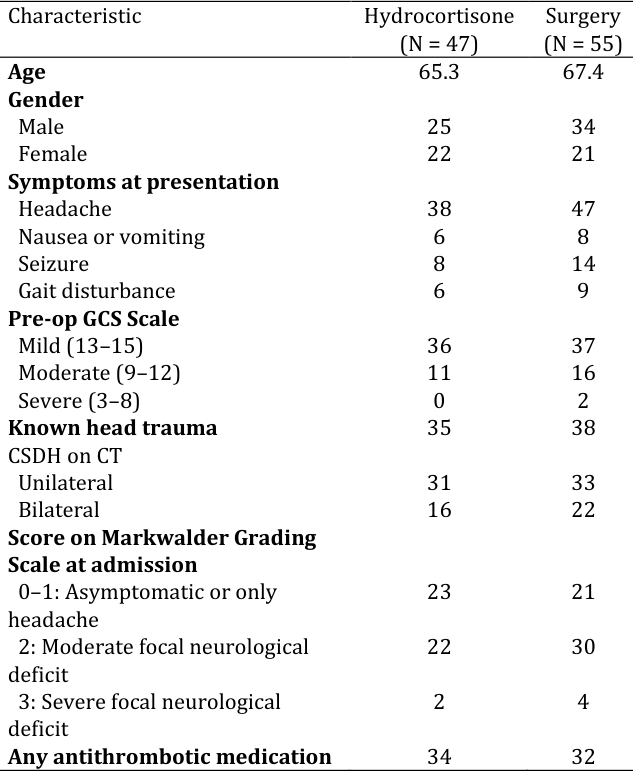
At baseline, clinical features were similar in the two trial groups; 2% of the patients had a GCS score of 3 to 8 at presentation, and 91.2% had a GCS score of 13 to 15. In the hydrocortisone group, fewer patients were able to move independently without any assistance before being diagnosed with cSDH than in the surgical group. In our study, 9.56% of the patients had diabetes mellitus, 15.27% had ischemic heart disease, and 18.31% had hypertension.
In the surgical group, a favorable outcome and cure was
observed in 52 of 55 patients (94.5%) after surgery. Three of the 55 patients (6.5%) in the surgery group underwent reoperation for cSDH.
Figure 1
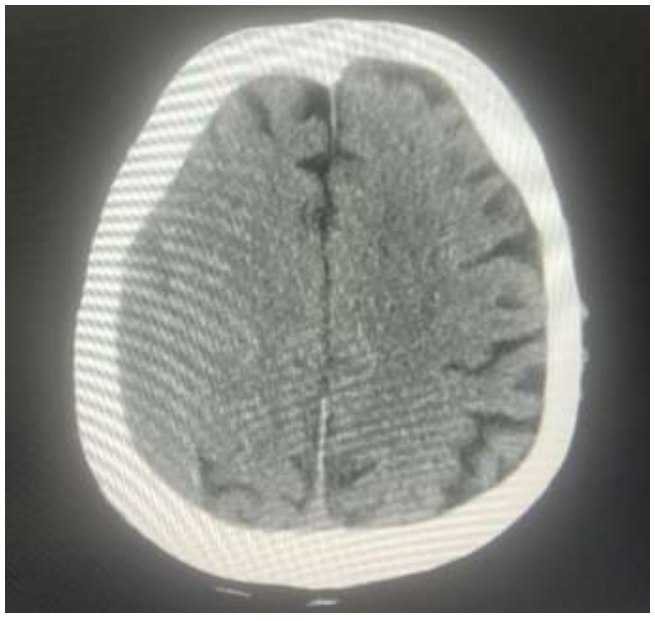
Pre hydrocortisone therapy images of parietal cSDH
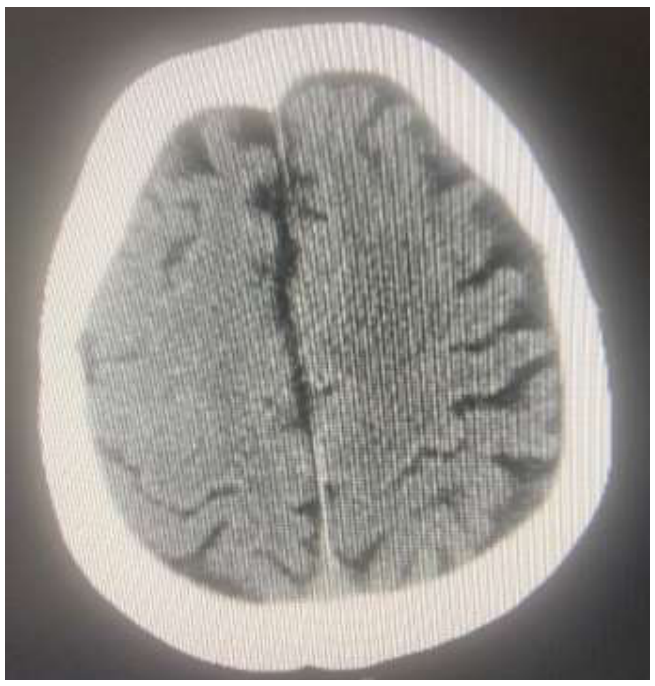
Same patient post hydrocortisone therapy images of parietal cSDH
Pre-treatment Markwalder Grading Scales (MGS)
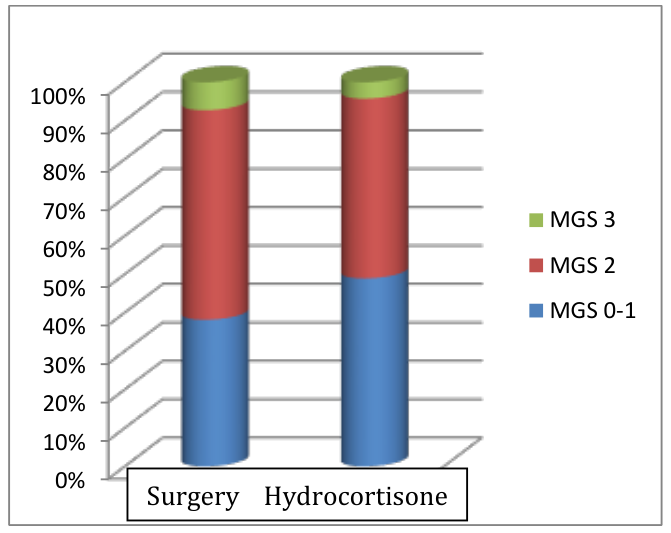
Post-treatment Markwalder Grading Scales (MGS)
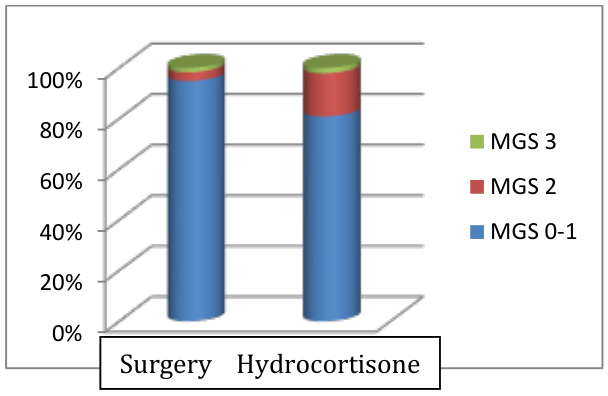
In the hydrocortisone group, while no significant resorption of the hematoma was observed at month one (8.5%), a favorable outcome was observed in 38 of the 47 patients (80.9%) at month three. There was a difference of 7.2 points in favor of the surgery group.
Nine of the 47 patients (19.2%) in the hydrocortisone group underwent surgery due to hematoma. Two of the 47 patients (4.2%) in the hydrocortisone group underwent reoperation for cSDH. The difference between the trial groups was 6.2 percentage points, in favor of the hydrocortisone group. A total of five patients underwent multiple operations (two in the hydrocortisone group and three in the surgical group) (Figures 1,2).
Of the 102 patients, 5.9% had Markwalder Grade 3, and 51% had Markwalder Grade 2. Of the patients with Markwalder Grade 0-1, 43.1% had complete resolution of the hematoma after 3 months. Functional outcomes as measured by Markwalder Rating Scale scores at discharge and at 3 months are shown in figures 3,4.
Death was reported at three months in one of 47 patients (2.1%) in the hydrocortisone group, in three of 55 patients (5.4%) in the surgery group. Adverse events of particular interest occurred in
seven of 47 patients (14.9%) in the hydrocortisone group. These included hyperglycemia in three, new-onset psychosis in two, and gastric complaints in two patients. However, no serious side effects occurred with additional medical therapy. Superficial wound infection occurred in two (3.6%) patients in the surgery group whic were cured with medical therapy. The mean total hospital stay was 2.9 days in the hydrocortisone group and 6.8 days in the surgery group. The difference was found to be statistically significant (p<0.05).
4. Discussion
Despite the high incidence of cSDH and the vast literature on treatment, a standard treatment model or guideline for the treat-ment of cSDH remains elusive. Surgery is the best option for cSDH patients with Markwalder grades 3 and 4, hematoma thickness greater than 25 mm, and midline shift greater than 5 mm. The com-monly performed surgical treatment is BHC or craniotomy ²³,²⁴. However, elderly patients are at particularly high risk for complica-tions from open surgery and general anesthesia ²⁵. Regarding cSDH is usually seen in the elderly population, and the increasing preva-lence of antiplatelet use, and comorbid systemic diseases by aging; more data to guide treatment decisions becomes obviously im-portant.
In elderly patients, the length of hospital stay after surgery was significantly longer than hydrocortisone group (2.9 days, 6.8 days, P<0.05). This may be related to the greater effect of general anes-thesia and surgery in elderly patients ²⁵,²⁶.
The treatment regimen consisted of hydrocortisone adminis-tered at a tapering dose for 5 weeks. Although there was no study with hydrocortisone, the dosage and duration of treatment in this trial were chosen based on previous studies with glucocorticoids ²⁷. However, other ongoing studies of glucocorticoids are evaluating the dosage and duration of treatment, including 2, 3, and 8 weeks of treatment ²⁸,²⁹.
In our study, we expected sufficient clinical improvement to al-low nonoperative treatment and by reducing the risk of hematoma recurrence in patients who underwent surgery. However, contrary to our hypothesis, we found a striking finding in our study. In terms of the primary outcome, the results were not satisfying in the hydro-cortisone group at 1 month. The difference between the groups (86%) was statistically significant (p<0.05). However, at 3 months, a favorable outcome of 80.9% was observed in the hydrocortisone group (p>0.05); and the difference between the groups decreased to 7.2% in favor of the surgery group.
A total of 19.2% of the patients in the hydrocortisone group eventually underwent surgery, while the rate of reoperations in the surgery group was 4.9%. In our study, we found that hydrocortisone treatment did not show a significant difference compared to surgery in terms of the recurrence rate between the two groups. Miah et al. concluded that there was a difference between surgery and hydro-cortisone treatment and that the recurrence rate due to treatment failure requiring additional surgery was 55% in the dexamethasone group, compared to 6% in the surgery group ³⁰. Fountas Kostas et al. also reported the same conclusion. The hydrocortisone group had a higher recurrence rate compared to the surgery group ³¹. In addition, comparing hydrocortisone may lead to different results in terms of recurrence depending on the surgical technique used in the comparison ³². The reason for the lack of a significant difference be-tween the groups in our study may be the short follow-up period of 3 months.
Although surgery can treat mass effect symptoms acutely, more patients died compared to the hydrocortisone group, and patients
in the surgery group had more complications and significantly longer hospital stays than the hydrocortisone group. This may be due to the fact that general anesthesia and open surgery are more harmful to elderly patients 15,16, 33.
In the studies of Miah et al. ³⁰, Sun et al. ³⁴, Qian et al. ³⁵, and Del-ago et al. ³⁶, the most common side effect in the dexamethasone group was observed to be hyperglycemia. It is known that this side effect is related to glucocorticoid use. In particular, in these studies, hyperglycemia improved and returned to normal levels when corti-costeroid use was discontinued. However, Miah et al. decided to dis-continue the study by stopping dexamethasone use due to compli-cations in their study. In some studies, such as Sun et al., there was a significant difference in favor of surgery between surgery and dex-amethasone groups, but their basic patient characteristics were dif-ferent, and their variability was high. The patients who underwent surgery had low GCS and high Markwalder Grading Scale. In our study, hyperglycemia due to hydrocortisone was detected in 3 (6.4%) patients. We thought that the reason for these low rates in our study was that dexamethasone is long-acting, and its potency is 25 times higher than hydrocortisone. In our study, it is possible that a shorter course with a smaller dose may reduce the risks of hyper-glycemia, new-onset psychosis, and gastric complaints detected in the hydrocortisone group compared to the surgery group.
Limitations
The limitations of this study are that it is retrospective in nature, only two institutions and the follow-up period is short at 3 months. In addition, it only included patients with recurrent or residual cSDH, Markwalder grade 0, 1, 2, and no evidence of significant herniation. The indication for reoperation was not addressed. In addition, we did not discuss postoperative drainage or the duration of drainage, which is very important for reoperation.
5. Conclusions
The use of hydrocortisone treatment for cSDH has been shown to be effective in patients with Markwalder grade 0, 1, 2, and shift less than 5 mm. It significantly improved neurological outcomes. It has low morbidity and mortality rates, especially in elderly patients and those with additional systemic diseases. Our results suggest that hydrocortisone may be a first-line treatment. However, basic research identifying new pathways and mechanisms of action of drugs used in the treatment of cSDH needs to be conducted at a higher level to target cSDH.
Statement of ethics Ethical approval for the study was obtained from the HSU Adana City Hospital Clinical Research Ethics Committee (Decision No: 879, Date: 20.11.2025).
Author Contributions Both authors contributed equally to this study and read and approved the final version of the manuscript.
Funding This research received no specific grant from any funding agency in the public, commercial, or not-for-profit sectors.
Conflict of interest statement The authors declare that they have no conflict of interest.
Availability of data and materials The data and materials of this study are available upon reasonable request.
genAI No artificial intelligence-based tools or generative AI technologies were used in this study. The entire content of the manuscript was originally prepared, reviewed, and approved by both authors.
References
- Albadrani MS, Almutairi SG, Aljeelani YO, Farsi SH, Alahmadi MH, Aljohani MA, et al. Comparing the Effectiveness of Corticosteroid and Surgery in Managing Chronic Subdural Hematoma: A Systematic Review and Meta-analysis. Interdiscip Neurosurg. 2023;34:101842. Crossref
- Bartley A, Bartek J Jr, Jakola AS, Sundblom J, Fält M, Förander P, et al; Tisell M. Effect of irrigation fluid temperature on recurrence in the evacuation of chronic subdural hematoma: a randomized clinical trial. JAMA Neurol. 2023;80(1):58-63. Crossref
- Kameyama M, Kawase M, Hirano T, Matsuyo K, Tominaga T. Epidemiology of chronic subdural hematomas. No Shinkei Geka. 2011;39(12):1149-1153.
- Yang W, Huang J. Chronic subdural hematoma: epidemiology and natural history. Neurosurg Clin N Am. 2017;28(2):205-210. Crossref
- Shapey J, Glancz LJ, Brennan PM. Chronic subdural haematoma in the elderly: is it time for a new paradigm in management? Curr Geriatr Rep. 2016;5(2):71-77. Crossref
- Srivatsan A, Mohanty A, Nascimento FA, Hafeez MU, Srinivasan VM, Thomas A, et al. Middle meningeal artery embolization for chronic subdural hematoma: meta-analysis and systematic review. World Neurosurg. 2019;122:613-619. Crossref
- Sezer C, Gokten M, Acıkalın R. Troponin I new biomarker in traumatic brain injury. Indian J Surg. 2023;85(1):120-126. Crossref
- Lega BC, Danish SF, Malhotra NR, Sonnad SS, Stein SC. Choosing the best operation for chronic subdural hematoma: a decision analysis. J Neurosurg. 2010;113(3):615-621. Crossref
- Peters DR, Parish J, Monk S, Pfortmiller D, Henegar M, Bernard J, et al. Surgical treatment for a chronic subdural hematoma in the elderly: a retrospective analysis. World Neurosurg X. 2023;18:100183. Crossref
- Ducruet AF, Grobelny BT, Zacharia BE, Hickman ZL, DeRosa PL, et al. The surgical management of chronic subdural hematoma. Neurosurg Rev. 2012;35(2):155-169. Crossref
- Feghali J, Yang W, Huang J. Updates in chronic subdural hematoma: epidemiology, etiology, pathogenesis, treatment, and outcome. World Neurosurg. 2020;141:339-345. Crossref
- Ivamoto HS, Lemos HP Jr, Atallah AN. Surgical treatments for chronic subdural hematomas: a comprehensive systematic review. World Neurosurg. 2016;86:399-418. Crossref
- Ko BS, Lee JK, Seo BR, Moon SJ, Kim JH, Kim SH. Clinical analysis of risk factors related to recurrent chronic subdural hematoma. J Korean Neurosurg Soc. 2008;43(1):11-15. Crossref
- Santarius T, Kirkpatrick PJ, Ganesan D, Chia HL, Jalloh I, Smielewski P, et al. Use of drains versus no drains after burr-hole evacuation of chronic subdural haematoma: a randomised controlled trial. Lancet. 2009;374(9695):1067-1073. Crossref
- Mason SE, Noel-Storr A, Ritchie CW. The impact of general and regional anesthesia on the incidence of post-operative cognitive dysfunction and post-operative delirium: a systematic review with meta-analysis. J Alzheimers Dis. 2010;22(Suppl 3):67-79. Crossref
- Di Rienzo A, Iacoangeli M, Alvaro L, Colasanti R, Somma LGMD, Nocchi N, et al. Mini-craniotomy under local anesthesia to treat acute subdural hematoma in deteriorating elderly patients. J Neurol Surg A Cent Eur Neurosurg. 2017;78(6):535-540. Crossref
- Edlmann E, Giorgi-Coll S, Whitfield PC, Carpenter KLH, Hutchinson PJ. Pathophysiology of chronic subdural haematoma: inflammation, angiogenesis and implications for pharmacotherapy. J Neuroinflammation. 2017;14(1):108. Crossref
- Holl DC, Volovici V, Dirven CMF, Peul WC, van Kooten F, Jellema K, et al. Pathophysiology and nonsurgical treatment of chronic subdural hematoma: from past to present to future. World Neurosurg. 2018;116:e402-e411. Crossref
- Yadav YR, Parihar V, Namdev H, Bajaj J. Chronic subdural hematoma. Asian J Neurosurg. 2016;11(4):330-342. Crossref
- Guo S, Gao W, Cheng W, Liang C, Wu A. Endoscope-assisted surgery Vs burr-hole craniostomy for the treatment of chronic subdural hematoma: a systemic review and meta-analysis. Front Neurol. 2020;11:540911. Crossref
- Hutchinson PJ, Edlmann E, Bulters D, Zolnourian A, Holton P, Suttner N, et al. Trial of dexamethasone for chronic subdural hematoma. N Engl J Med. 2020;383(27):2616-2627. Crossref
- Markwalder TM, Steinsiepe KF, Rohner M, Reichenbach W, Markwalder H. The course of chronic subdural hematomas after burr-hole craniostomy and closed-system drainage. J Neurosurg. 1981;55(3):390-396. Crossref
- Liu W, Bakker NA, Groen RJM. Chronic subdural hematoma: a systematic review and meta-analysis of surgical procedures. J Neurosurg. 2014;121(3):665-673. Crossref
- Almenawer SA, Farrokhyar F, Hong C, et al. Chronic subdural hematoma management: a systematic review and meta-analysis of 34,829 patients. Ann Surg. 2014;259(3):449-457. Crossref
- Di Rienzo A, Iacoangeli M, Alvaro L, Colasanti R, Somma LGMD, Nocchi N, et al. Mini-craniotomy under local anesthesia to treat acute subdural hematoma in deteriorating elderly patients. J Neurol Surg A Cent Eur Neurosurg. 2017;78(6):535-540. Crossref
- Mason SE, Noel-Storr A, Ritchie CW. The impact of general and regional anesthesia on the incidence of post-operative cognitive dysfunction and post-operative delirium: a systematic review with meta-analysis. J Alzheimers Dis. 2010;22(Suppl 3):67-79. Crossref
- Holl DC, Volovici V, Dirven CMF, van Kooten F, Miah IP, Jellema K, et al. Corticosteroid treatment compared with surgery in chronic subdural hematoma: a systematic review and meta-analysis. Acta Neurochir (Wien). 2019;161(6):1231-1242. Crossref
- Edlmann E, Holl DC, Lingsma HF, et al. Systematic review of current randomised control trials in chronic subdural haematoma and proposal for an international collaborative approach. Acta Neurochir (Wien). 2020;162(4):763-776. Crossref
- Hutchinson PJ, Edlmann E, Bulters D, Zolnourian A, Holton P, Suttner N, et al. Trial of dexamethasone for chronic subdural hematoma. N Engl J Med. 2020;383(27):2616-2627. Crossref
- Miah IP, Holl DC, Blaauw J, Lingsma HF, den Hertog HM, Jacobs B, et al. Dexamethasone versus Surgery for Chronic Subdural Hematoma. N Engl J Med. 2023;388(24):2230-2240. Crossref
- Fountas K, Kotlia P, Panagiotopoulos V, Fotakopoulos G. The outcome after surgical vs nonsurgical treatment of chronic subdural hematoma with dexamethasone. Interdiscip Neurosurg. 2019;16:70-74. Crossref
- Yagnik KJ, Goyal A, Van Gompel JJ. Twist drill craniostomy vs burr hole drainage of chronic subdural hematoma: a systematic review and meta-analysis. Acta Neurochir (Wien). 2021;163(12):3229-3241. Crossref
- Uno M. Chronic subdural hematoma - Evolution of etiology and Surgical Trement. Neurol Med Chir (Tokyo). 2023;63(1):1-8. Crossref
- Sun TF, Boet R, Poon WS. Non-surgical primary treatment of chronic subdural haematoma: Preliminary results of using dexamethasone. Br J Neurosurg. 2005;19(4):327-333. Crossref
- Qian Z, Yang D, Sun F, Sun Z. Risk factors for recurrence of chronic subdural hematoma after burr hole surgery: potential protective role of dexamethasone. Br J Neurosurg. 2017;31(1):84-88. Crossref
- Delgado-López PD, Martín-Velasco V, Castilla-Díez JM, Rodríguez-Salazar A, Galacho-Harriero AM, Fernández-Arconada O. Dexamethasone treatment in chronic subdural haematoma. Neurocirugia (Astur). 2009;20(4):346-359. Crossref
Copyright & License
This article retains the copyright and licence terms stated at its original publication. The journal's later licensing policy does not replace or amend those terms.
Read the original article PDF for the applicable copyright and reuse terms.