Abstract
Hair interference is a common problem at otoplasty, facelift and scalp surgeries and it is a threat for sterility. Also it discomforts the surgeon and makes difficulty for concentrating on operation. In this manner it can result in longer operation time. At scalp operations metal combs 1 and hair clips 2 have been used for hair seperation. At facelift operations, using rubber bands that are made by cutting surgical gloves fingers for bunching hairs at the incison lines at the postuaricular area is a cheap and practical method. 3 McGivney instrument, that has been designed for rubber band ligation of hemorrhoids, has been used for bunching hairs 4 . Also an artery clip and haemorrhoid band can be used for same purpose: The band is mounted on to an artery clip that grasps the hair section while the band is rolled down over the clip. 5 At ear surgeries, surgical drapes are preferred worldwide for preparing surgical site.While removing the drape it can cause rupture or fracture of hair strands and also patients operated under local anesthesia can feel pain. Kayıran 6 has used a postauricular adhesive tape to prevent hair interference and he reported that the tape was easily removed by peeling it off after 70% alcohol was sprayed on. Latex or silicone swimming cap has been used for tucking the hair into cap behind the ears. 7 A medical elastic stocking open at the ears and at the face has been used for preventing hair interference. 8 We are using hair gel for preventeing hair interference at otoplasty surgeries.Hairs are reclined posteriorly by the help of hair gel (Figure 1). Afterwards surgical site is cleaned with povidone iodine and closed with sterile clothes. Not a hair strand goes out of sterile clothes and interferes with operation. Patients are told to remove dreessing and have a shower at the postoperative second day. None of the patients complain about keeping hair gel on hairs for 2 days. Using hair gel for hair seperation at otoplasty surgery is a cheap and practical method.
Keywords: otoplasty; ear; hair interference; hair gel
Sayın Editör;
Otoplasti ameliyatında pratik bir saç
ekartasyon yöntemi: saç jölesi
Otoplasti, yüz germe ve skalp ameliyatlarında
saçın cerrahi alana girmesi sık karşılaşılan bir
problemdir. Saçın cerrahi alana girmesi
sterilite açısından sorun yaratır. Ayrıca
cerrahın çalışma konforunu azaltarak ve
ameliyata odaklanmasını zorlaştırarak
operasyon süresinin uzamasına sebep
olabilmektedir.
Skalp operasyonlarında saçın ekartasyonu için
metal tarak1 ve metal toka2 kullanılmıştır. Yüz
germe ameliyatlarında postauriküler
bölgedeki insizyon alanındaki saçların küçük
demetler halinde bağlayarak cerrahi alanı
hazırlamak için eldiven parmaklarından
kesilerek hazırlanan lastik halkaların
kullanılması ucuz ve pratik bir yöntemdir3.
Saçı küçük demetler halinde bağlamak için
hemoroid band ligasyonunda kullanılan
McGivney aletiyle beraber ligasyon bandının
kullanımı4 veya klempin boynuna ligasyon
bandının geçirilip saç demetinin klemple
tutulmasından sonra bandın saç köküne doğru
kaydırılması5 gibi farklı yöntemler de
bildirilmiştir.
Otoplasti ameliyatlarında saçların
uzaklaştırılarak cerrahi alanın hazırlanması
için yapışkanlı cerrahi örtüler tercih
edilmektedir. Bu örtüler saça yapıştığı için
çıkarılırken saç kopma kırılmasına sebep
olabildiği gibi lokal anestezi altında
gerçekleştirilen operasyonlarda hastanın canı
yanabilmektedir. Kayıran6 sıvı geçiren
yapışkanlı cerrahi örtüler kullanılması
durumunda operasyon bitiminde örtünün
%70’lik alkol ile ıslatıldığında kolayca
çıktığını bildirmiştir. Kulak ameliyatlarında
saçın saçın ekartasyonu için yüzme bonesi7 ve
saçlı deriyi ve boynu sarıp kulaklar ve yüzü
açıkta bırakan, tapınak şövalyelerinin
başlığını andıran medikal elastik maske8
kullanılması önerilmiştir.
Otoplasti ameliyatlarında saçların cerrahi
alandan uzaklaştırılmasında saç jölesi
kullanmaktayız. Saçlar jöle yardımı ile
kulaktan uzaklaşacak şekilde arkaya
yatırılmaktadır (Şekil 1).
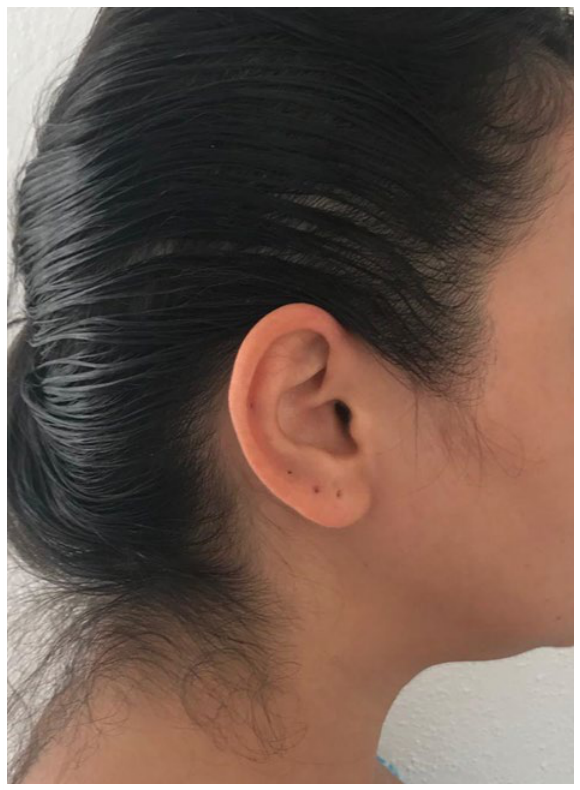
Takiben cerrahi alan boyanıp steril örtüler
örtülerek operasyon gerçekleştiril-mektedir.
Hastalara postoperatif ikinci günde pansumanı
açarak banyo yapması önerilmektedir. İki gün
boyunca saçının jöleli kalmasından şikâyet
eden hastamız olmamıştır. Otoplasti
ameliyatlarında saçların cerrahi alandan
uzaklaştırılması için saç jölesi kullanılması
ucuz ve pratik bir yöntemdir.
References
- Ersoy B, Sirinoglu H. Metal combs used for hair separation in scalp surgery. Aesthetic plastic surgery. 2011;35(4):666-7. https://doi.org/10.1007/s00266-010-9628-1
- Laxmisha C, Thappa DM. Utility of hair clips for scalp surgeries. Dermatologic surgery: official publication for American Society for Dermatologic Surgery. 2006;32(5):770.
- Turkaslan T, Ozsoy Z. Surgical glove finger pieces for hair separation. Plastic and reconstructive surgery. 2004;114(2):621-2. https://doi.org/10.1097/01.PRS.0000128505.04759.B4
- Heden P. A new and simple way to clear the hair from operating fields in the scalp. Plastic and reconstructive surgery. 1992;89(1):144-6.
- O'Neill JK, Stone CA. A novel method of hair control during face-lift surgery-haemorrhoid bands. British journal of plastic surgery. 2005;58(5):741-2. https://doi.org/10.1016/j.bjps.2005.02.008
- Kayiran O. Preventing hair interference during ear surgery. The Journal of craniofacial surgery. 2014;25(3):1124-5. https://doi.org/10.1097/01.scs.0000436744.82912.3e
- Bovill ES, Wharton S. Not a hair out of place: a neat method of otoplasty preparation. Journal of plastic, reconstructive & aesthetic surgery: JPRAS. 2009;62(12):e627-8. https://doi.org/10.1016/j.bjps.2008.11.074
- Rinaldi V, Moffa A, Costantino A, Cassano M, Casale M. The (templar) knight cap: a new and simple way to prevent hair interference during ear surgery. Eur Arch Otorhinolaryngol. 2018;275(11):2889-91. https://doi.org/10.1007/s00405-018-5136-8
Copyright & License
This article retains the copyright and licence terms stated at its original publication. The journal's later licensing policy does not replace or amend those terms.
Read the original article PDF for the applicable copyright and reuse terms.